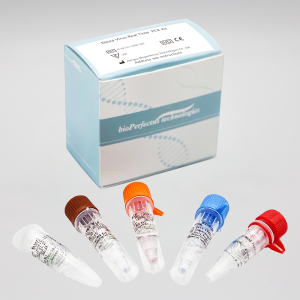


HantaVirus Real Time PCR Kit
Características
- Sin reactividad cruzada con otros virus de síntomas similares
- El control interno garantiza la fiabilidad de todo el proceso
- Compatible con diversos instrumentos convencionales
Código: YJC60124NW-50T
Presentación: Caja 50 Reacc

690,00€
Parameters
| LOD | 5 copies/reaction |
| Sample Input Volume | 5 μL |
| Sample Type | human serum |
| Testing Time | 79 min |
| Storage Temperature | -20±5℃ |
| Shelf-life | 12 months |
Co-circulation of Hantavirus, Pathogenic Leptospira spp., and Bartonella spp. in Rodents in the Wanzhou Section of the Three Gorges Reservoir Region, 2021–2023
Abstract
Background:
Materials and Methods:
Results:
Conclusion:
Productos relacionados
-
-
Humano
Servicio integral de metabarcoding | Análisis 200 tubos
Servicio integral de metabarcoding 16S Express/Premium | Preparación de bibliotecas + Bioinformática completa + Secuenciación Illumina NextSeq PE300
Ideal para:
✅ Investigación académica
✅ Estudios medioambientales
✅ Proyectos clínicos sobre microbiomas
✅ Análisis de alimentos y aguaTanto si está ampliando su proyecto como si está empezando, ¡tenemos el plan perfecto para usted!
 SKU: n/a
 -
Humano
Viruela del Mono Virus Real Time PCR Kit
Caracteristicas- Approved: CE marked
- Feasible: compatible with multiple sample types
- Efficient: 62 min for 96 samples
- Reliable: 5 copies/reaction with internal control
- Fulfilling: Central African clade & West African clade detectable
Código: YJC70115NW-50T
Presentación: Caja 50 Test
 SKU: YJC70115NW-50T
 -
Humano
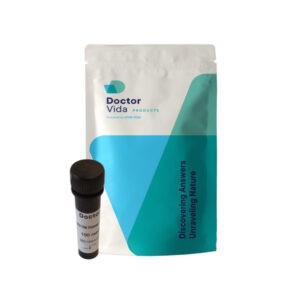
Doctor Vida Universal LAMP Master Mix | 100 reacciones
¡Precisión y eficiencia para la amplificación isotérmica del ADN!
Doctor Vida Universal LAMP Master Mix es una solución formulada que contiene una enzima ADN polimerasa desplazadora de cadenas y un tampón LAMP, diseñada para realizar la amplificación isotérmica del ADN utilizando cebadores personalizados y que permite la detección de fluorescencia en tiempo real cuando se utiliza un colorante fluorescente LAMP (no incluido).
SKU: n/a -
Humano
Prueba de sexo en aves psitácidas Doctor Vida | Rápida y fácil
Las pruebas solo se pueden realizar con el dispositivo portátil Doctor Vida Pocket, que debe solicitarse por separado.
✅ Determinación rápida y precisa del sexo de psitácidos: realice la prueba usted mismo desde casa, sin necesidad de acudir a un laboratorio. Resultados disponibles en menos de 1 hora.
✅ Incluye 4 pruebas completas: cada paquete le permite determinar el sexo de hasta 4 aves con total comodidad y fiabilidad.
✅ Con aplicación móvil gratuita: vea y gestione los resultados a través de la aplicación Doctor Vida, disponible para teléfonos inteligentes.
✅ Tecnología portátil y profesional: utilice el dispositivo Doctor Vida Pocket para procesar las muestras de forma fácil y eficaz.
✅ Muestra basada en plumas: simplemente retire unas pocas plumas del ave. El proceso es rápido, no invasivo y cómodo para el animal.
✅ Incluye certificado y tarjeta de identidad. Llámenos para obtener más detalles.
SKU: n/a